Fast Car Removals Gatton: Instant Cash & Free Towing
If you’ve got an old car sitting in the yard, there’s a good chance it’s been there longer than you planned. It might be a non-runner you meant to fix, a damaged car no one wants to buy privately, or a deceased-estate vehicle that’s become one more job on an already long list. In Gatton, that problem feels bigger because getting rid of a vehicle isn’t always as simple as dropping it somewhere on the weekend.
That’s why local car removal matters here. A straightforward pickup, clear paperwork, and same-day collection can turn a stressful job into a simple handover. For many owners, the best outcome isn’t squeezing out a private-sale price. It’s getting the vehicle gone properly, without towing headaches, tyre-kickers, or loose ends.
That Old Car in the Driveway Can Be Gone by Tonight
A common Gatton story goes like this. The car stopped being useful months ago, but it never became urgent enough to deal with. Then the rego lapses, the battery dies, grass starts growing around the tyres, and suddenly that old sedan is just part of the property.
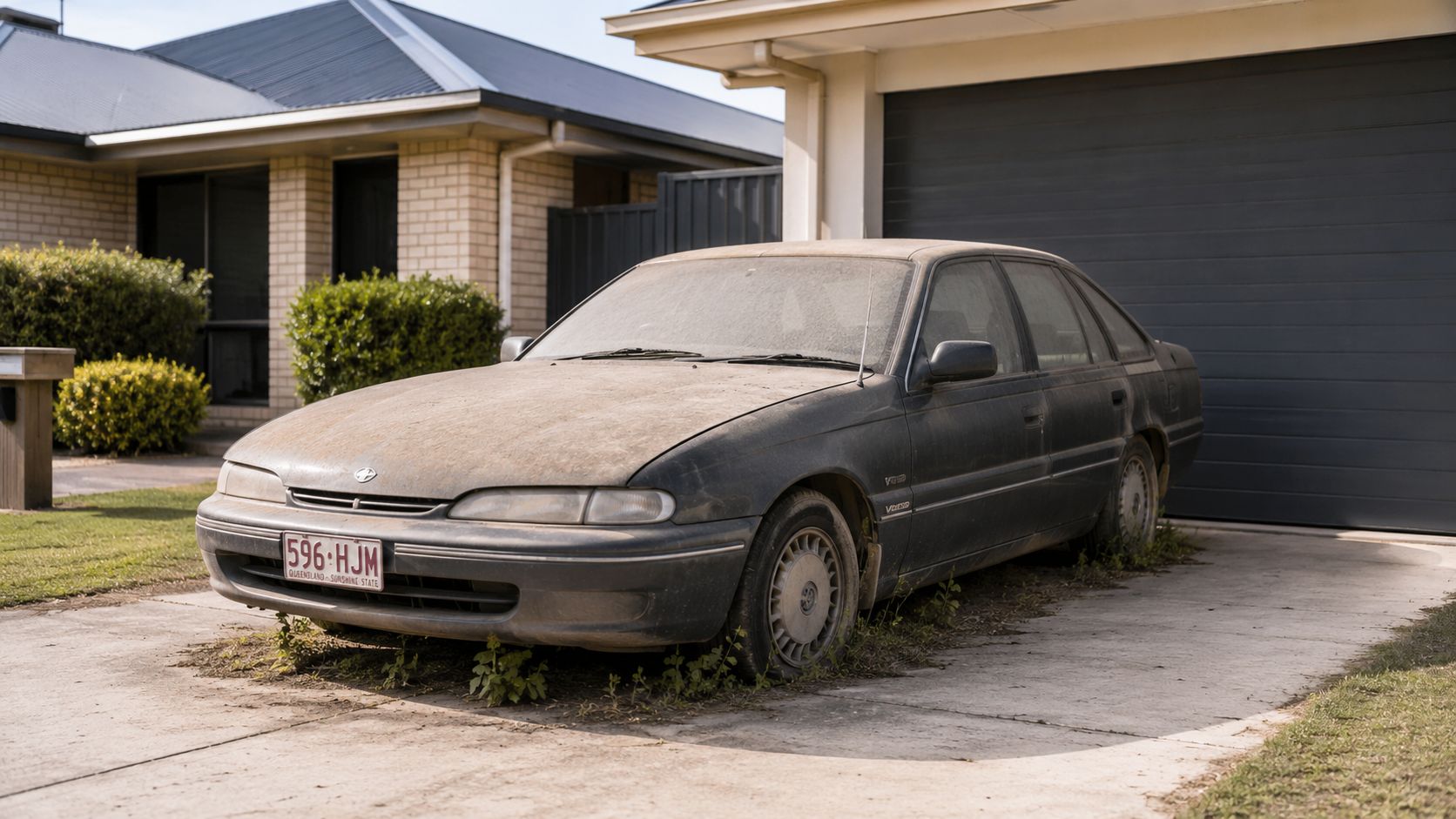
In a city, some people can drive a vehicle to a yard or arrange disposal with shorter travel times. Gatton works differently. The Lockyer Valley covers about 2,278 square kilometres and had a population of 43,975 at the 2021 Census, which is why on-site pickup matters so much in this area, as noted by local Gatton car removal information. A regional setup like that makes towing and collection far more practical than expecting owners to sort everything out themselves.
Why the job gets put off
The car isn’t ignored due to a lack of concern. It’s put off because every option sounds annoying.
- Private sale friction: You clean it, photograph it, answer messages, and still get offers from people who disappear.
- Towing problems: If it won’t start, you’re stuck organising transport before you can even dispose of it.
- Paperwork uncertainty: Owners often aren’t sure what’s needed for an unregistered or damaged vehicle.
That’s where car removals in Gatton make life easier. A pickup-based service suits how people live here. It removes the need to move the car first, and it cuts out the dead time that usually drags these jobs out.
The relief is usually the real value
The money helps, of course. But what most owners want first is space, certainty, and a clean finish. Once the vehicle is booked, collected, and handed over properly, the whole situation stops hanging over you.
If that sounds familiar, this guide on reasons to remove an unwanted car from your property is worth a quick read. It lines up closely with what many Gatton locals deal with every day.
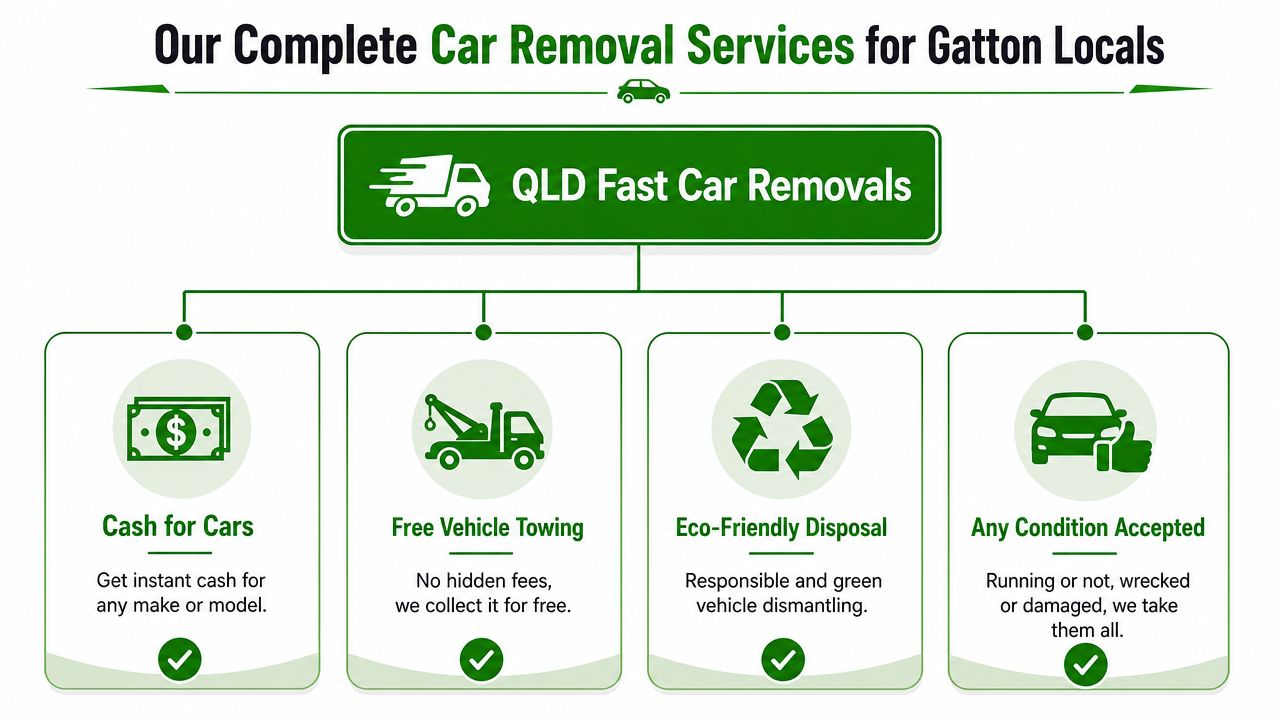
Our Complete Car Removal Services for Gatton Locals
Those seeking car removals Gatton typically look for one of four things. They want a fair offer, towing included, fast pickup, and confidence that the vehicle won’t just be dumped into the wrong channel after collection.
This is what that full-service approach looks like in practice.
What owners usually need most
For Gatton owners in the 4343 postcode, operators advertise free same-day pickup and instant payment, with payouts that can reach up to AU$19,000 depending on the vehicle’s condition, make, model, and recoverable parts, according to Gatton 4343 car removal details. That matters because vehicle value isn’t just about whether it still drives. It often comes down to what can still be recovered after dismantling.
A vehicle with a solid drivetrain, useful panels, intact electronics, or salvageable catalytic components tends to be viewed very differently from a stripped shell. That’s why a proper quote is based on recovery value, not just weight on a tow truck.
What’s included in a proper removal service
A complete service usually means more than one transaction. It combines purchase, logistics, and disposal into one job.
- Cash for cars: Suitable for old, damaged, scrap, unwanted, and non-running vehicles.
- Free towing: The quoted amount should be the amount you receive, without a last-minute pickup charge.
- Same-day pickup: Especially useful in Gatton, Toowoomba, Ipswich, and other regional or outer-metro areas where people don’t want a dead vehicle sitting around for another week.
- Parts recovery and recycling: Better operators treat the vehicle as a recovery asset, not just scrap metal.
That broader approach is also why related searches such as cash for cars Brisbane, car removals Brisbane, cash for scrap cars Brisbane, used car buyer Brisbane, and cash for old cars Brisbane often overlap with Gatton searches. Owners across South East Queensland usually want the same thing. They want the car gone fast, the quote to hold up, and the process to be easy.
For operators trying to tighten up dispatch, customer communication, and admin flow, this overview of support for hauling businesses is useful because it shows the operational side that customers don’t always see, but definitely feel.
How Our Simple 3-Step Removal Process Works
Vehicle removal is often assumed to be messy. It usually isn’t. The process is simple when the details are handled in the right order and the paperwork is done at pickup instead of pushed back onto the owner.
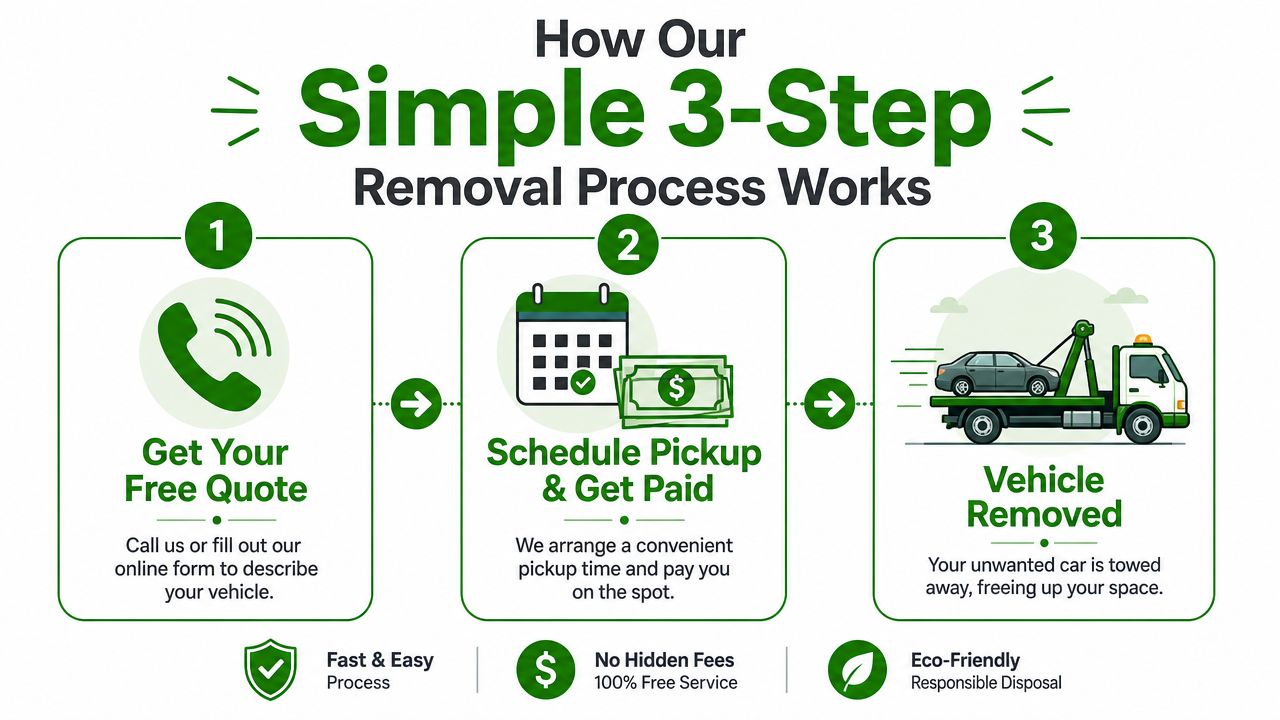
Step 1 Get a quote that matches the real vehicle
Start with the basics. Make, model, condition, location, and whether the vehicle is complete. If it’s missing parts, has accident damage, or won’t roll freely, say so early. Accurate information helps avoid awkward renegotiation when the truck arrives.
A good quote should account for the practical realities of collection, not just the ideal version of the car sitting in your mind from five years ago.
Step 2 Lock in pickup at a time that suits the property
Once the quote is accepted, pickup gets scheduled. This is where regional experience matters. A driver who understands access issues, narrow driveways, paddock edges, workshop yards, and rural blocks is far more useful than someone who only handles easy metro collections.
Short notice can often work well, but owners should still tell the team about anything that affects loading, such as:
- Access limits: Tight gates, soft ground, or vehicles parked in front.
- Vehicle position: Nose-in against a fence is different from kerbside access.
- Missing items: No keys, flat tyres, or locked steering can change how the tow is done.
Step 3 Get paid and hand the vehicle over properly
At pickup, the final details are checked, the paperwork is completed, and payment is made before the vehicle leaves. This is the part many owners worry about most, especially with damaged or unregistered cars.
According to guidance on handling disposal documentation at pickup, a key part of car removal is managing the necessary transfer and disposal paperwork on the spot so the process stays compliant and hassle-free for the owner. That matters because paperwork delays are often what turn a simple removal into an ongoing headache.
The best part of the process isn’t complicated. The car goes, the space opens up, and you don’t need to chase the next step yourself.
We Buy Any Car Ute Van or Truck in Any Condition
One of the biggest mistakes owners make is assuming their vehicle is too far gone to bother quoting. That’s rarely true. A vehicle doesn’t need to be roadworthy, tidy, or even complete enough for a private buyer to want it.
Traditional buyers usually want something they can drive away, advertise easily, and resell with minimal effort. A removal buyer looks at the situation differently. That’s why people who can’t get traction with local listings often have better luck with a service built for hard-to-sell vehicles.
Vehicles We Accept in Gatton
| Vehicle Type | Accepted Conditions |
|---|---|
| Passenger cars | Old, unwanted, scrap, non-running, damaged |
| SUVs and 4WDs | Accident-damaged, high-kilometre, unregistered, worn out |
| Utes | Work-worn, damaged, retired fleet, non-drivable |
| Vans | Old commercial vans, broken-down delivery vans, unwanted stock |
| Trucks | Damaged, unregistered, non-running, end-of-life commercial vehicles |
| Forklifts | Unused, faulty, damaged, no longer economical to repair |
| Motor boats | Unwanted, aged, damaged, no longer in service |
Condition matters, but not the way most people think
A tidy vehicle with strong reusable parts will usually attract a better offer than a bare shell. But even a rough car can still suit removal if it has recovery value in parts, metal, or components.
That’s why a lot of owners who search for a used car buyer Brisbane end up using a removal service instead. The same applies in Gatton. If the vehicle is unregistered, damaged, or not worth privately marketing, a specialist buyer is often the more practical fit.
If your biggest concern is paperwork on an unregistered vehicle, this page on selling unregistered cars for removal covers the common sticking points clearly.
Why Gatton Residents Trust Our Licensed Car Removal Service
Trust in this industry doesn’t come from flashy wording. It comes from how the job is handled. People remember whether the driver arrived when promised, whether the amount changed at the gate, and whether the whole handover felt above board.
In regional areas, reputation travels quickly. A removal operator who wastes people’s time won’t stay trusted for long.
What customers actually judge
The basics matter more than clever marketing.
- Licensed and insured operation: Owners want to know their property, vehicle, and transaction are being handled properly.
- No hidden towing fees: If towing is included, it should stay included.
- Clear communication: Pickup windows, payment method, and required ID should be explained before the truck arrives.
- Broad service reach: A team that regularly works across places like Logan, Ipswich, the Gold Coast, Sunshine Coast, and Toowoomba is usually better equipped to manage varied pickup conditions.
Responsible disposal is part of trust
There’s another side to trust that many owners don’t think about until later. What happens to the vehicle after it leaves?
Queensland has more than 4.9 million registered vehicles, which is why end-of-life handling matters so much in the wider recovery system, as noted in this vehicle fleet context reference. In practical terms, that means removal services aren’t just clearing yards. They’re part of a chain that should direct vehicles into dismantling, parts recovery, and recycling rather than simple waste disposal.
The most trusted services usually get the small things right. They answer directly, don’t dodge paperwork questions, and don’t make collection sound easier than it really is. That honesty goes a long way.
Your Car Removal Questions Answered
By the time most owners are ready to book, the big decision is already made. The remaining questions are usually practical. Keys, access, rego status, and what happens after the vehicle leaves are the things people want cleared up before they commit.
What if I’ve lost the keys or rego papers
Lost keys don’t automatically stop a removal. The main issue is whether the team knows in advance so they can plan the load correctly. Missing paperwork can also be manageable, but ownership and identity still need to be confirmed at handover.
If your concern is registration cancellation after the car is gone, this guide on how to cancel car registration in Queensland is a helpful next step.
Does the car need to be easy to access
Easy access helps, but awkward access doesn’t rule the job out. What matters is being upfront. If the car is behind another vehicle, stuck in a shed, parked on soft ground, or hard against a fence, say so when booking. That gives the driver a chance to bring the right setup and avoid delays.
The frustrating jobs are rarely the difficult ones. They’re the ones where no one mentioned the difficulty beforehand.
How do you handle the vehicle responsibly after removal
This is one of the most important questions. Compliant end-of-life vehicle handling requires de-pollution before dismantling, including safe removal of the battery, refrigerants, fuel, and other hazardous fluids to prevent contamination, according to the EPA end-of-life vehicle guide. Proper handling also involves suitable work surfaces, spill control, and separate fluid storage.
That means responsible car removal isn’t just about towing. It’s about transferring the vehicle into a system that deals properly with environmental risk.
Is private sale ever better than removal
Sometimes, yes. If the car runs well, presents well, has current demand, and you’ve got time to manage inspections and negotiations, a private sale can make sense.
But many Gatton owners aren’t dealing with that kind of vehicle. They’re dealing with a car that won’t start, can’t be driven legally, or isn’t worth the effort of preparing for sale. In those cases, compliant removal is often the cleaner option because it solves transport, disposal, and handover in one move.
If you’re ready to clear space and get rid of an unwanted vehicle without the usual run-around, QLD Fast Car Removals offers a practical way to do it. You can get a quote, arrange pickup, and hand the car over with the paperwork handled at collection, which makes the whole process easier for Gatton owners who just want the job done properly.